The main steps of the responsibility determination procedure
If another EU+ country may be responsible for your asylum application, the authorities will follow several steps to decide this.
On this page, you can learn what happens during this procedure, including the interview, the decision, and what you can do if you disagree.
You may be interviewed to help understand which EU+ country will examine your application
If this is your first time applying for asylum, the authorities should arrange a personal interview.
Important
This will not be an asylum interview. The interview aims to determine which EU+ country should examine your application.

This interview has three main aims:
- to collect information that will help the authorities decide on the responsible EU+ country
- to let you ask any questions about how the procedure to determine the responsible EU+ country is carried out
- to ask you if there are any reasons why you should not be transferred to another EU+ country or why you should be allowed to remain in this country.
The interview will be in a language you understand well.

None of the information you give will be shared with the government or authorities in your home country. If there is anything during the interview that is not clear, you can ask questions. It is important for both you and the officer that you understand everything, so questions are always welcome.
The audio of the interview will be recorded and you will be shown a written summary of what was said. If, after receiving the written summary of your personal interview, you think any of the information is incorrect and you would like to amend it, you can request to do so.
If necessary, you can still provide additional documents after the interview or provide reasons why you should not be transferred to another EU+ country.
If you still have information or documents that you have not yet submitted, you must submit them to the authorities. They will inform you about the deadline.
Is an interview always carried out?
If this is your first time applying for asylum the authorities can still choose not to carry out a personal interview if:
- the EU+ country that is responsible for examining your application is already known
- they already have enough information to decide which EU+ country is responsible for examining your application
- you have previously missed an interview without telling the authorities why you could not attend
- you have failed to keep in contact with the authorities.
If an interview is not organised, you can request one. If the officers think they already have enough information to handle your case, they can refuse this request but they must provide their reasoning for not conducting the interview.
If you want to request a personal interview, you can contact the officer responsible for your case.
How long will the process take?

The communication between the countries usually takes between 1 and a half months to 3 months, but this can take longer depending on your case.

If another EU+ country confirms they will examine your application, you will be transferred within 6 months of the date they accepted the request to transfer you.

If the request was because you have a family member in another EU+ country, the transfer will be treated with priority.
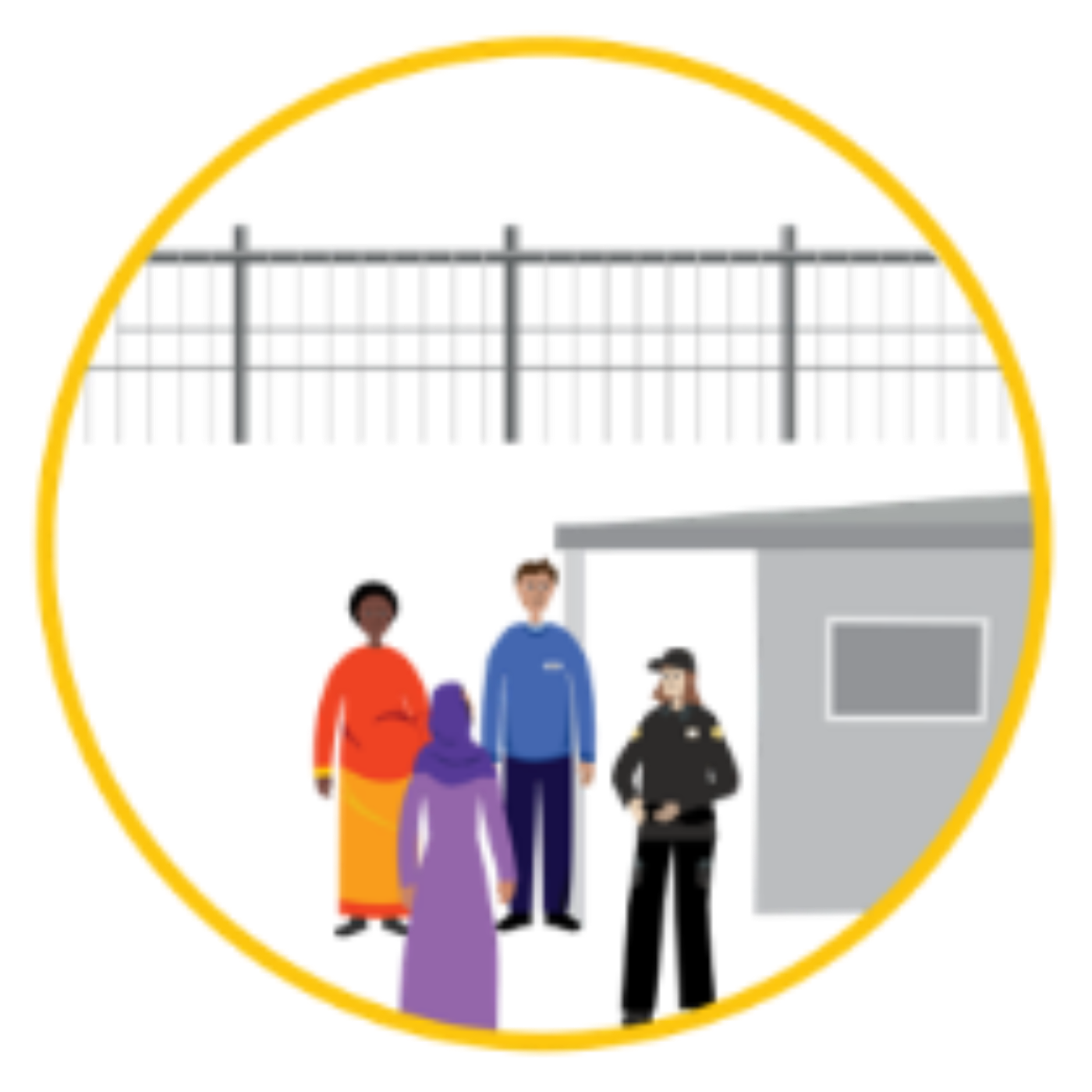
If you are currently detained or are detained in the future, your case will be treated with urgency.
Your transfer should be organised within 5 weeks. If the transfer is not carried out within 5 weeks, you will be released from detention. However, your transfer will still be arranged within 6 months from the date the EU+ country is responsible for examining your application accepted the request.
If you are in prison for committing a crime, the time limit for the transfer can be increased to a maximum of 1 year.

Important
If you run away, hide from or do not cooperate with the authorities in the organisation of the transfer, the time limit for the transfer can be increased up to a maximum of 3 years.
What happens once the decision is made?

If you receive a transfer decision to be moved to another EU+ country, some of your rights will be cancelled, for example:

- you will not receive many services and types of support
- you will not be allowed to work or follow courses.

The transfer should be carried out within 6 months of the date that the EU+ country confirmed or accepted to examine your application.
What happens if you disagree with the transfer decision?

If it is decided that another EU+ country is responsible for examining your application, you will receive a transfer decision. This decision will inform you which country you will be transferred to.
If you disagree with a transfer decision, you can provide your reasons to the court. This is called lodging an appeal. When you appeal a decision, a court or tribunal will make the final decision.
There are only three reasons for appealing a transfer decision:
- you claim it would be against your human rights to be transferred to that particular EU+ country
- there is new information that was not available at the time of the transfer decision which could have affected that decision
- you have family in another EU+ country who you should be reunited with instead.

If you cannot afford to hire your own legal adviser, a legal adviser will be provided to help you with the appeal free of charge.
You will be supported by an interpreter who speaks a language you can understand throughout this process.
What you need to know about the appeal
The time limit, where and how to lodge an appeal will be explained in the transfer decision provided to you.
You should give the reason or reasons why you disagree with the decision to transfer you to another EU+ country.
You should also give the reason or reasons why you should not be transferred to the EU+ country that is responsible for examining your application while your appeal is ongoing.
The court will first decide whether you may wait for the outcome of the appeal in this country whilst your appeal is ongoing within 1 month. This is known as the appeal on suspensive effect.
If the court decides that you cannot wait for the outcome of the appeal in this country, you will be transferred to the EU+ country that is responsible for examining your application whilst your appeal is ongoing.
If the court decides that you should be allowed to remain in this country whilst your appeal is ongoing, the court will try to provide a final decision on whether you should be transferred to the EU+ country that is responsible for examining your application within 1 month of the date of the decision on suspensive effect.
If your appeal is not accepted, you will be transferred to the EU+ country that is responsible for examining your application. The transfer should take place within 6 months of the date that the court made its final decision.
Important!
You must cooperate with the authorities and travel to the EU+ country that is responsible for examining your application.
What do you want to know next?
Learn more about which country is responsible for your asylum application and about your rights and duties during this procedure.